NUTTY CONSUMER’S 5TH RANT AGAINST “COOKIE CUTTER” CALL CENTERS

Customer-Satisfaction-Cartoon-286x300 customer service survey

For any business decision maker, I am gifting you with my minimum standard wish list for how I would like to be treated when I contact a call center selling  more sophisticated products such as property and casualty insurance.  My first wish is not to be placed on hold for more than two minutes and to be connected to the right department on my first contact. I do not want to verify my identity more than once. I strongly dislike having to be trans-ferred around and so I shouldn’t have to endure this more than one time. I want to work with a professional who is qualified, competent and empowered to handle whatever issue I plan to discuss during the initial phone call. I would hope the agent is allowed enough time to listen to me as a human being without the agent having to worry if their greeting was correct; that the call flo met the company’s standards and the closing statement matched a script. As a non legal scholar, I should be able to clearly understand any legal compliance disclosures and should not have to listen to the same disclosures repeatedly.  I would like to be able to count on the agent not being so micromanaged, so that there is enough time for the agent to make sure all my problems are resolved even if my issues are complicated or time consuming to fix. If I am calling for customer service or to complain, I do not want to be sold  something not related to my call. I want my issue to be handled!!!  Any information provided to me should be accurate and complete. If my request  or issue cannot be completed during the initial contact, then I would like the first agent to document sufficient notes so that the next agent can assist me without me having to repeat the entire story again. All possible steps should be taken to avoid my having to make a return call. For example, if I need to email or sign a form, another agent could finish up whatever the first agent started and then email or mail me the results. Remember my time is also precious.
images9D2EMYCT customer service letter

At the end of the call, the agent can then inquire if I have any interest in learning or being sold any of your other company products. If an agent or supervisor has promised to return a phone call on a particular date and time, then I would like the agent to be able to meet their commitment. Whenever possible, I would like the extensions for various divisions to be listed on the company’s website along with the correct hours of service, so that when I call, I can just input the extension and circumvent the voice call system which  never seems to understand me.

Personally, I prefer to use the internet; however, please be aware that many of your more mature clients may not be comfortable using the computer.  Their monies are just as green as your younger clients. If some of your clients are not computer literate, please have marketing materials to mail them along with the CEO’s name; address, phone and fax numbers; a listing of all your products; extensions for the various divisions with their business hours. If your company will treat me as I have described above, then your company will eventually reflect a “customer culture” environment.

customer serviceConsumers, please do not continue to enable your favorite companies to be overtaken by the “COOKIE CUTTER CALL CENTER SYNDROME.” When a company  does not treat you with the dignity, respect and value that you deserve, please write or email the company’s CEO. If you “google” any company’s name, the right side of the screen should list the name of the CEO, the headquarters address and phone numbers. Occasionally, there is an email link.               

Dear Company management, please keep up to date as to improved call center metrics to insure better treatment towards your customers. The following is from a blog  published 10/10/2013 by an insider, Mike Jeffries, ” It is important to take a holistic view when working out what you’re trying to achieve with contact centre performance measurement. For example, if you’re measuring cost per call, it might seem sensible for a centre to finish that call as quickly as possible. However, the more satisfied the customer, the more chance of them becoming brand advocates. The ROI from the call is then probably higher as a long-term relationship is nurtured even if the call has extended slightly beyond answering the initial query. Creating a formula to calculate the ‘time versus value add’ could be beneficial. In fact, as businesses have moved away from viewing contact centres as purely cost centres, and have increasingly acknowledged the value in providing a positive experience to the caller, so metrics such as average call handling time have become outmoded.”

In my opinion, it would be better to track the number of products ( within and outside of one’s division) that an sales agent has sold as well as how much monies they have produced for the company. The referral sales’ transfers should be tracked as to which result in a closed sale. Emphases should always be placed on measuring actual results versus conformity to a set of rules such as following the outline of a script etc. An independent group could monitor the agents’ calls for quality control with the goal being to insure that the sales and/ or customer service agents consistently deliver information and assistance that is accurate, complete and disclose any legal compliance rules.They should not be aware of the identity of the agent or even the results of any previous evaluations to prevent any bias. Then the gifted sales agents would be enabled to handle calls from potential clients as suits them while still maintaining high professional sales and performance standards which are measurable. They would be empowered by having truly objective parameters to compare themselves to their peers and they would have the satisfaction of seeing how they have directly contributed to the profits of their employer. Direct management and any coaching should be of a positive and supportive nature. All customers should have access to a customer satisfaction survey at the end of a call without the agent being able to bar them in any way and the customer should be subject to no more than three questions.They should be offered the option to go on to the company web site to provide input and/ or there should be a well advertised, easily accessible  phone number by which a customer could leave a message regarding their experience. In house team meetings could include brain storming sessions by which the sales agents can share their thinking on how to improve their sales performances and customer experiences. Various levels of management could make time to attend part of these sessions without immediate management present to insure that the infrastructure is well established to allow the agents a safe haven for the free flow of ideas. More research and development could be performed to continuously provide your sale professionals with the most up to date information regarding the competitors’ products and practices in addition to verifying that your products are the best value in the market.

images6AHQBAIY

Again, as per a call center marketer insider on the blog dated July, 25, 2012, Andrew O’ Brien writes: “When cookie cutter centers (CCC’s) spew value propositions on sales calls and in RFP’s, pricing is noted as the predominant competitive advantage. There is substantial cause for this claim: the outsourcer has cut corners at every turn to drive cost down to its lowest levels, and they want to brag about it. Hundreds of these providers mention low cost and high savings as a key competitive advantage. Usually and unfortunately the correlation between cost and quality is clear.” He continues with the following comments: “When agents can track and measure and manage their own performance, their individual effort takes on greater contextual meaning. Culture begins with engagement and engagement begins with finding meaning in your work – no matter what job you are doing. In our contact center world, there is a clear line from transparency, accountability, and meaning at the agent level to a strong, productive culture at the corporate level.”

RELATED ARTICLES:

1.) From Call Center Agent To Zappos’ Life Coach: This Forbes www.forbes.com/…/from-callcenter-agent-to-zappos-executive-th…

 2.)7 Secrets To Get Good Customer Service By Phone – Forbes www.forbes.com/…/7-secrets-to-get-good-customerservice-by-ph

 3.)A Story Of Poor Customer Service And How To Fix It – Forbes www.forbes.com/…/a-common-problem-a-story-of-poor-custome

4.)How American Express Transformed Its Call CentersHarvard blogs.hbr.org/…/american-express-how-we-tran…

5.)Earn Customer Loyalty Without Losing Your Shirt – Harvard blogs.hbr.org/…/earn-customer-loyalty-without/‎‎

NUTTY CONSUMER’S 7TH RANT VS. “COOKIE CUTTER” CALL CENTERS

call-center-cartoon-100-aht aht cartoonTHIS BLOG WILL FOCUS ON THE CALL CENTER EMPLOYEE AND POSSIBLE LEGAL ISSUES.  After doing some research on the subject of call center issues, I have become increasingly concerned about the well being of the employees being part of the “cookie cutter” call system syndrome. To gain further insight, I have  discussed this subject with several current and former call center employees as well as doing  basic research. It is somewhat depressing to picture a professional with a college degree such as an insurance agent or financial advisor, working under this prototype call center environment without any customization to ensure that both the needs of the customer remains a top priority but also that employees are treated with dignity and respect.

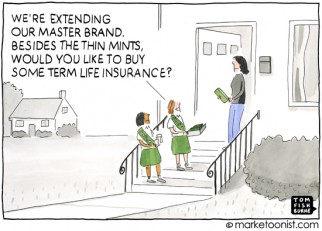
140303_masterbrand-322x231STAR CUSTOMER SERVICE PIX

How could agents not suffer some anguish if they felt required to compromise their moral values in order to keep their job?  How would  anyone not be uncomfortable by finding themselves being placed in a position as at Wells Fargo by which you are directed to sell hard on each and every incoming call no matter what the customers’ circumstances. What if the customer is calling in about a serious complaint; is very upset due a recent tragedy and is calling in a claim; they have just lost thousands of dollars due to a poor investment; they have lost out on the purchase of a dream home due to the company’s poor mortgage customer service  etc.? An agent would have to be blessed with a strong stomach to continue in the hard sales role even if pressured by management. It is easy to think that the employee should just quit. However, what if you are the family breadwinner with several children and can’t risk the consequences of just leaving a company during a time when the job market is on a downturn. You could ask why doesn’t the agent protest to management. As one agent advised me, it is management who are enforcing these standards. If you are perceived as not being a team member, your life will be made very unpleasant. You will be  marginalized with a reputation for being a difficult or disgruntled employee; someone who is unstable as well as not being a team player.  An agent from a well established company described to me what typically occurs when an employee dares to challenge the status quo. The offending agent could be subject to excessive monitoring with supervisors listening in at random and excessive surveillance. As time passes the agent will experience extreme discomfort and will eventually leave.

cartoon6760 customer service joke re agent performanceOne agent described how she had worked for a company for seven years and had many plum assignments typically given to top performing agents along with outstanding employee reviews. She was a young, healthy adult with a college degree as well as some previous successful sales experience and management training with a beauty product company. However, at some point while being employed by a company with an excellent reputation, she voiced concerns about the sales tactics being practiced. She eventually ended up with mental health issues and left the company on disability leave after enduring  many weeks of bullying.  She tried returning to work but found that her anger issues were returning as she would still be working for the same supervisor who had harmed her. She didn’t want to live in fear and so she resigned. She had been subject for weeks to a frequently deployed tactic by call center management of excessive surveillance and constant monitoring. This includes the supervisors listening and recording many calls for hours and at random times with the intent to catch the employees making an error. Then the employees are frequently confronted with all their errors, written notices, increased coaching sessions  with the employees’  full knowledge that they are helpless, and even if they get that they are being treated unfairly and unjustly, they have no legitimate, reliable and effective recourse for relief. This is just for starters! These tactics  are also used to set up an employee to be fired.  If companies believe that this pattern of subjecting offending employees to these bullying and mental harassment tactics  designed to separate out an agent, is a way to avoid legal repercussions, please reconsider this stance.  Currently, these systemic practices  may not be sufficient for claimants to legally prevail on the basis of the companies’ managers, intentionally “inflicting extreme emotional distress” on any particular employee.  However, as per an article in the Insurance  Journal, published 3/4/2013, titled “Workplace Bullying Emerging As Major Employment Liability Battleground “by Sam Hananel, “more than a dozen states — including New York and Massachusetts — have considered anti-bullying laws in the past year that would allow litigants to pursue lost wages, benefits and medical expenses and compel employers to prevent an “abusive work place.”  

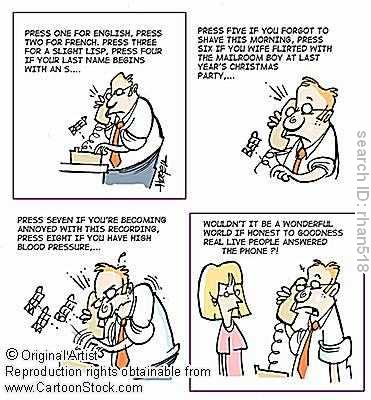
rhan518l call system customer service issueIn the text  of the “bullyonline.org” website that I mentioned was very popular in the United Kingdom in a previous blog and which has been inundated with calls from call center employees, lists one of the mental illnesses resulting from working in this highly stressful industry as PTSD. My first reaction is that was just too far fetched as no “cookie cutter” call center worker can claim to have been subject to the stress of a war zone. However, according to a standard definition of PTSD, the leap is at least worth consideration. A standard definition is as follows: “Post-traumatic stress disorder is a mental health condition that is triggered when a person sees or is party to a psychologically traumatic event, such as war, a natural disaster, or any situation that invokes feelings of helplessness or Intense fear. While most people eventually adjust to the aftereffects of such events, some people find their symptoms getting worse with time. These worsening symptoms are the product of PTSD.”

Why tempt fate? Perhaps your legal division can look at the bigger picture and ask themselves, how would your company’s reputation be tarnished by having some of these practices being depicted on the front pages of the Washington Post  due to some unforeseen incident?

customer service cartoon

Some other methods designed to separate a quality employee from a company are more subtle. One gentleman had an MBA, a strong, successful real estate sales background  and he also had received outstanding reviews, accolade letters from the President’s office, had a track record of surpassing any and all sales goals set by management and was well respected by his peers. He just made the politically incorrect move to question some of the company’s sales tactics and treatment of the clients. As a result, whenever he applied for another position within the same company, he was never successful. There came a time when he needed to be able to work from home because of a difficult family health issue. Other representatives with minimally acceptable employee evaluations were granted this exception but this one gentleman with an exceptional record was not. Consequently, he did resign and another company is reaping the rewards of employing an outstanding worker.

imagesLWJQRJLZDEAR COMPANY, do not allow accountants ( cost cutters) or the legal division to recommend actions intended to avoid negative legal consequences which are counter to your mission statement of providing excellent customer products and service while treating  your clients with exceptional levels of integrity and respect; and which could consequently cost you your business reputation.  Frequently, these divisions view the company’s well being from a limited viewpoint and cannot envision the big picture. Right now I am talking about how an employee described to me how she is strongly discouraged from documenting anything she discusses with a client even if it is important. The reason given for this rule was that the writing of notes on the various accounts over time adds to the average call handling time. I suspect that this directive has more to do with the legal department wishing to prevent future legal claims by not leaving a paper trail.  As per “Do You Know Your Call Center Law?” which was published on 1/21/2014, by Tracey E. Schelmetic, TMCnet Contributor, “if an agent hands out faulty advice and it results in an injury, the contact center could be liable.” Their advice is to make sure agents are properly trained to provide directions and advice.

The problem with the plan of not allowing your employees to keep notes to avoid the paper trail is that technology is improving. In time,  a customer will be able to record their conversation with a call center representative. As per federal laws, there cannot be any expectation of privacy as most call centers record calls as well. There are discussions on the blogosphere as how to manage the state laws regarding a consumer being legally able to record a call center call.  As an example, on the blog, The Daily Dot, dated August 12, 2014 , titled “How to Record a Customer Service Call Without Breaking The Law, ” the Author Aaron Sankin writes, “if you decide to start recording your customer service calls, it’s a good idea to ask the customer service rep if it’s okay before hitting the little red button. In this case, it may be better to ask permission than forgiveness. Laws regarding the recording of telephone conversations —typically called “wiretap laws”—fall in to two basic categories: one-party consent, and two-party consent. In many two-party-consent states, all parties on the call must consent. At the moment, 18 states and the District of Columbia have wiretap laws on the books. It’s important to note that the location of the person you’re recording matters when it comes to state laws. Here’s a quick rundown of each state’s law, according to the Digital Media Law Project:

Arizona: One party must consent
California: All parties must consent
Florida: All parties must consent
Georgia: One party must consent
Illinois: Unclear—so get two-party consent to be safe
• Indiana: One party must consent
Massachusetts: Two-party consent; secretly recording calls is illegal
Michigan: All parties likely must consent—but courts are divided
• Missouri: One party must consent
New Jersey: One party must consent
New York: One party must consent
• North Carolina: One party must consent
• Ohio: One party must consent
Pennsylvania: All parties must consent
Tennessee: One party must consent
Texas: One party must consent
Virginia: One party must consent
Washington: All parties must consent
 Washington, D.C.: One party must consent

Mr. Sankin recommends that even if you don’t see your state on this list, make sure to check all applicable state laws before recording anybody. He continues to state, “If you’re calling from a smartphone, you’re going to need a different system and a perfect app for that is called TapeACall. TapeACall, which runs on both iPhone and Android phones, lets users record any conversation at the touch of a button. Those recordings are stored on TapeACall’s servers and can be played back instantaneously on the device. The files can also be exported and saved on the phone or a computer in .mp3 format. The service is free for 60-second clips, but costs $9.99 for a version with unlimited recording time. (Full disclosure: I use TapeACall almost every single day doing reporting and can personally attest that it’s magical).”

Mr. Sankin added the following: “Paul Stockford, research director of the National Association of Call Centers, said he doesn’t think it’s especially commonplace for customers to record their calls with customer service reps. ‟I’ve seen isolated incidents,” he said. ‟But I don’t know about this being any kind of trend.” Recent events indicate that it may soon become one. A few weeks ago, another dissatisfied Comcast customer released a legendarily painful recording of a company rep making every possible excuse to avoid letting him cancel his service. The call went massively viral and became a huge black eye for Comcast, which is in the process of waging a publicity campaign to convince federal regulators to approve its proposed merger with Time Warner Cable. In short, your best weapon against bad customer service may be a recorded call. Just be careful before you use it.”

In the end, there will be a paper trail and the company will be forced to increase their training programs and to stress quality control as to the reasonableness and accuracy of information provided by their representative. Why allow your company to be impeded by the accountants and legal experts from investing now in increased training and from implementing a constructive, quality control plan to improve the quality, completeness of detail and accuracy of information provided by your agents?

imagesN6N5X0WW process issue ..why more customers leaving

There are those who are asking me why am I discussing the employee. These “cookie cutter” call center systems have huge expenditures associated with high employee turnover rates, non planned absentee days; employees out for weeks due to mental health disability leave and the higher health care costs due to the increase in physical health and mental health employee claims because of this work stress. The additional costs alone to train professionals with college degrees to keep up with high turnover rates is astronomical in the insurance, banking and financial advice companies. These jobs can involve complicated thinking and long term learning curves and so there is that hidden problem of having customers interacting too often with inexperienced agents. These are unnecessary costs which can be allocated for example, towards lowering the costs of company’s products, investing in research and development and/ or increasing company revenues. It would be helpful if the “cookie cutter’ call center business analytics included tracking the above mentioned costs.

YES, THERE  ARE MAJOR COMPANIES TREATING THEIR BOTH THEIR CUSTOMERS AND THEIR CALL CENTER EMPLOYEES WELL WHILE ENJOYING TREMENDOUS SUCCESS SUCH AS AMERICAN EXPRESS, JACKSON  AND ZAPPOS. I WILL DISH OUT MORE IN MY FUTURE BLOGS.

RELATED ARTICLES:

1.)How American Express Transformed Its Call CentersHarvard blogs.hbr.org/…/american-express-how-we-tran…

2.) Workplace Stress and Mental Health Issues – Academia.edu www.academia.edu/…/Workplace_Stress_and_Mental_Hea

3.) 15 Effects of Stress on Call Center Agents and the Company blog.talkdesk.com/15-effects-of-stress-on-callcenteragents

4.) For mental health, bad job worse than no job – CNN.comvwww.cnn.com/2011/HEALTH/03/14/unemployment.health/
http://www.mirror.co.uk/…/callcentre-staff-facing-targets-22…
6.) The Last Bullying Frontier | Psychology Today by Guy Winch